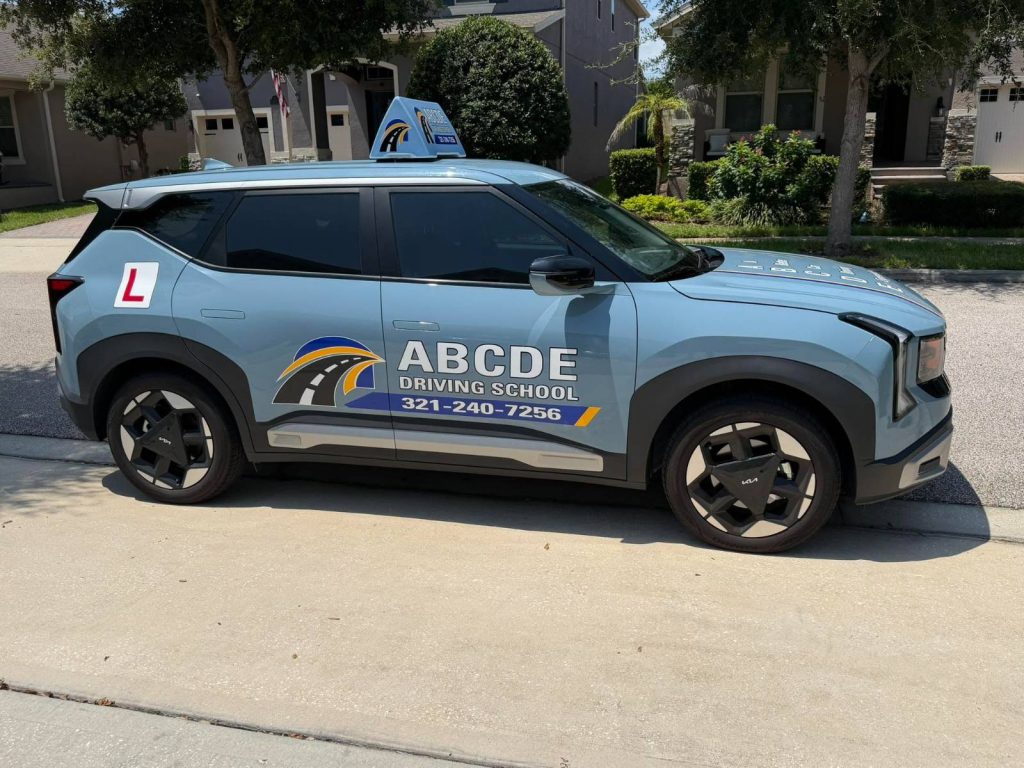
These tips for driving in fog come straight from FLHSMV and the National Weather Service. Foggy Central Florida mornings call for low-beam headlights, never high beams, since high beams make it harder to see. Slow down and leave extra distance between you and the car ahead. ABCDE Driving School’s two-hour lessons build that fog confidence.
Why is fog so dangerous for Florida drivers?
Fog takes away your view of the road, and it can do it fast. Winter is the time of year when large parts of Florida can be blanketed with fog, producing visibilities near zero (NWS Melbourne).
What makes Florida fog different from rain?
Rain reduces traction. Fog steals your sight. You can still brake on dry pavement in fog, but you can’t avoid what you don’t see. Patchy fog lowers visibility quickly, especially if you’re driving fast, the National Weather Service in Melbourne warns (NWS Melbourne).
What lights to use in fog?
Drive with low beams. High beams reflect off fog and make it harder to see (FLHSMV). Use low beams day or night, and turn on your fog lamps if your car has them (NWS Melbourne). Florida Statute 316.217 requires headlights on during any rain, smoke, or fog, and from sunset to sunrise.
Florida’s winter fog season catches new drivers off guard. You lose the road edge fast when moisture hangs thick over Clermont hills or Windermere lakes. The wrong light setting makes that worse.
Should you use fog lights?
If your car has fog lamps, turn them on (NWS Melbourne). Not every car has them.
What about hazard lights?
In fog, hazard flashers are for one thing: showing you’re stopped off the road. Turn them on only after you’ve pulled completely off the road (FLHSMV), not while you’re driving.
Here’s a quick reference for Florida drivers:
| Light setting | Use in fog? | Why |
|---|---|---|
| Low beams | Yes | Lights the road without the glare of high beams |
| Fog lights | Yes, if equipped | NWS Melbourne says to use them if equipped |
| High beams | Never | Reflects off fog and makes it harder to see (FLHSMV) |
| Hazard lights | Only after pulling off the road | Shows you’re stopped (FLHSMV) |
Practice switching between these settings before you need them. A student who knows the switch by feel keeps eyes on the road when fog rolls in.
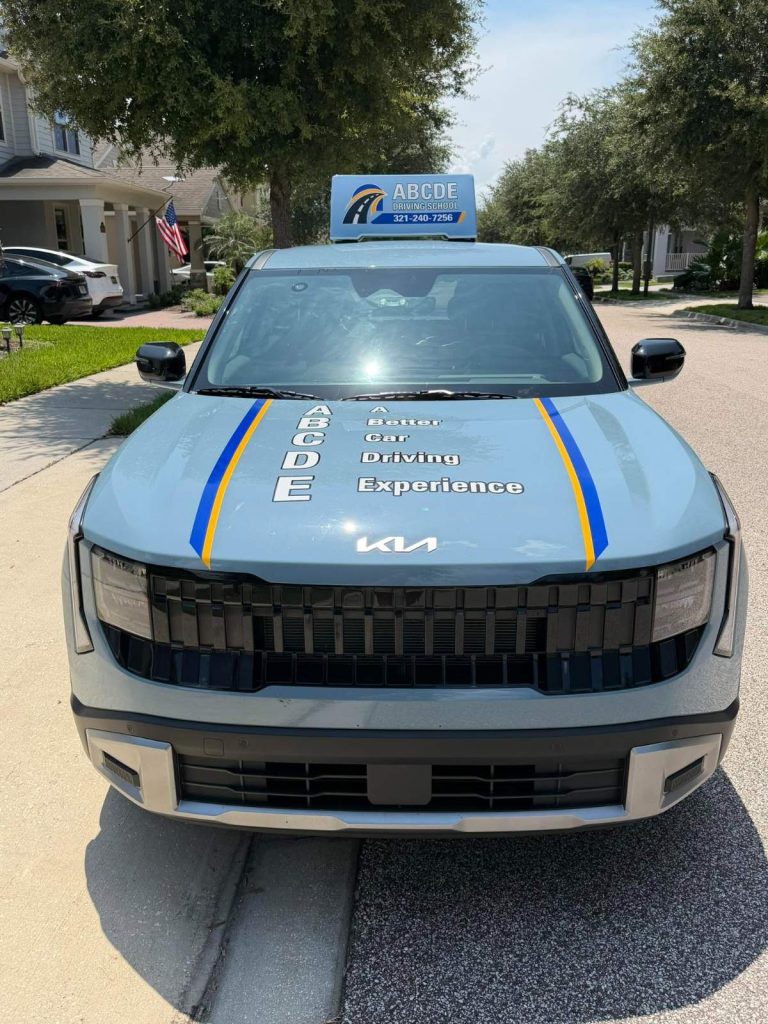
Tips for driving in fog: slow down and follow the road
Reducing speed gives you more time to react when visibility drops. Following the road markings keeps you in your lane when you can’t see what’s ahead.
Tips for driving in fog start with a simple rule: slow down. A slower speed gives you extra reaction time for sudden stops. Allow yourself more time to reach your destination. Rushing through fog on Central Florida roads like Highway 50 or the Turnpike turns a routine drive into a dangerous one. Leave plenty of distance between your car and the one in front of you.
How do you stay in your lane when you can’t see the lines?
Use the right edge of the road or the painted markings as your guide (FLHSMV). The solid white line on the right edge is your best reference when the center line disappears. Watching it keeps you from drifting toward oncoming traffic or onto the shoulder.
Should you ever pull over in heavy fog?
Yes. Pull over and wait if visibility gets too poor to continue safely. Never stop in a travel lane, because a stopped car there risks a chain-reaction collision (FLHSMV). Signal first, then carefully pull off as far as you safely can. Turn on your hazard flashers only once you’re completely off the road (FLHSMV, NWS Melbourne). If you’re a new driver or getting back behind the wheel as an adult, practicing these habits with a patient instructor builds the calm judgment fog demands.
The NWS also says to be extra careful near rivers and lakes and in school zones (NWS Melbourne). Around here, that covers Lake Apopka in Winter Garden and the Butler Chain of Lakes in Windermere. FLHSMV offers a few more fog-driving tips:
- Avoid passing and changing lanes.
- Signal turns well in advance and brake early.
- Increase your braking distance.
- Turn off the radio and put away your phone.
- Keep the windshield, windows and mirrors clear with your wipers and defroster.
Source for this list: FLHSMV, “When Visibility is Low, Drive Slow”.
What should you do when visibility drops to near zero?
Near-zero visibility calls for one response: get off the road. Continuing to drive in those conditions risks a collision you can’t see coming.
How do you pull over safely in dense fog?
Follow these steps in order (FLHSMV):
- Signal first.
- Carefully pull off the road as far as possible.
- Once you’re completely off the road, turn on your hazard flashers.
Never stop on the road itself. It may cause a chain-reaction collision (FLHSMV).
Should you keep driving if you can barely see?
No. Pull over rather than pushing on. Avoid aggressive or distracted driving when fog closes in. Checking your phone or rushing to a destination makes a bad situation worse. Your teen needs to know this before their first foggy commute. Practice the decision to stop, not push through.
How can new drivers practice fog safety with confidence?
New drivers build fog confidence through supervised practice in familiar conditions. Tips for driving in fog start with knowing what lights to use in fog before the engine turns on.
What should a new driver check before a foggy practice drive?
Headlights come first. FLHSMV says to keep all vehicle lights in good working order and the windshield and headlights clean (FLHSMV). A quick walk-around confirms every light works, and a wipe-down of the mirrors and windows keeps your view clear.
How does a parent or instructor structure the first fog lesson?
- Start in a quiet Winter Garden or Clermont neighborhood with low traffic and wide streets.
- Have the student find the low-beam switch and explain why high beams stay off.
- Drive well below the posted limit.
- Practice following the right-edge line as a lane reference when the center line disappears.
- Pull into an empty lot, stop completely, then talk through what felt different.
Darren and Lynne Bateson teach every lesson themselves at ABCDE Driving School. Their two-hour, one-to-one driving lessons use a dual-control 2027 Kia Seltos with an instructor-side brake and gas pedal. That safety net lets a student focus on the road instead of worrying about mistakes. Parents get a written assessment after every lesson showing strengths and what to practice next.
When is a new driver ready for fog practice on busier roads?
Readiness shows up in small wins. The student reaches for low beams without prompting. Speed changes happen smoothly, not abruptly. Following distance stays generous without reminders. Once those habits stick on side streets, a short route on a familiar Windermere or Dr. Phillips road adds just enough challenge. Getting close to test day? Here’s what’s on the Florida road test.
Driving in fog: common questions
Should I use high or low beams in fog?
Low beams. High beams reflect off fog and make it harder to see (FLHSMV).
Do I have to turn on headlights in fog in Florida?
Yes. Florida Statute 316.217 requires lighted lamps during any rain, smoke or fog.
When is fog most common in Florida?
Winter. The National Weather Service in Melbourne says that’s when large parts of Florida can be blanketed with fog.
When should I turn on hazard lights in fog?
Only after you’ve pulled completely off the road (FLHSMV).
Safety rules in this article are from FLHSMV, the National Weather Service in Melbourne and Florida Statutes, checked in October 2026.
Book a fog-ready lesson
Darren and Lynne teach two-hour, one-to-one lessons across Winter Garden, Windermere, Clermont and Dr. Phillips. Your first two-hour lesson is $150. Request a lesson or call 321-240-7256.